
Composite Fillings: How Is Care Planned?
The depth of decay or fracture, relationship to the pulp and remaining tooth structure are assessed.
Filling design reflects sound remaining tissue and bite forces; extensive loss may require another option.
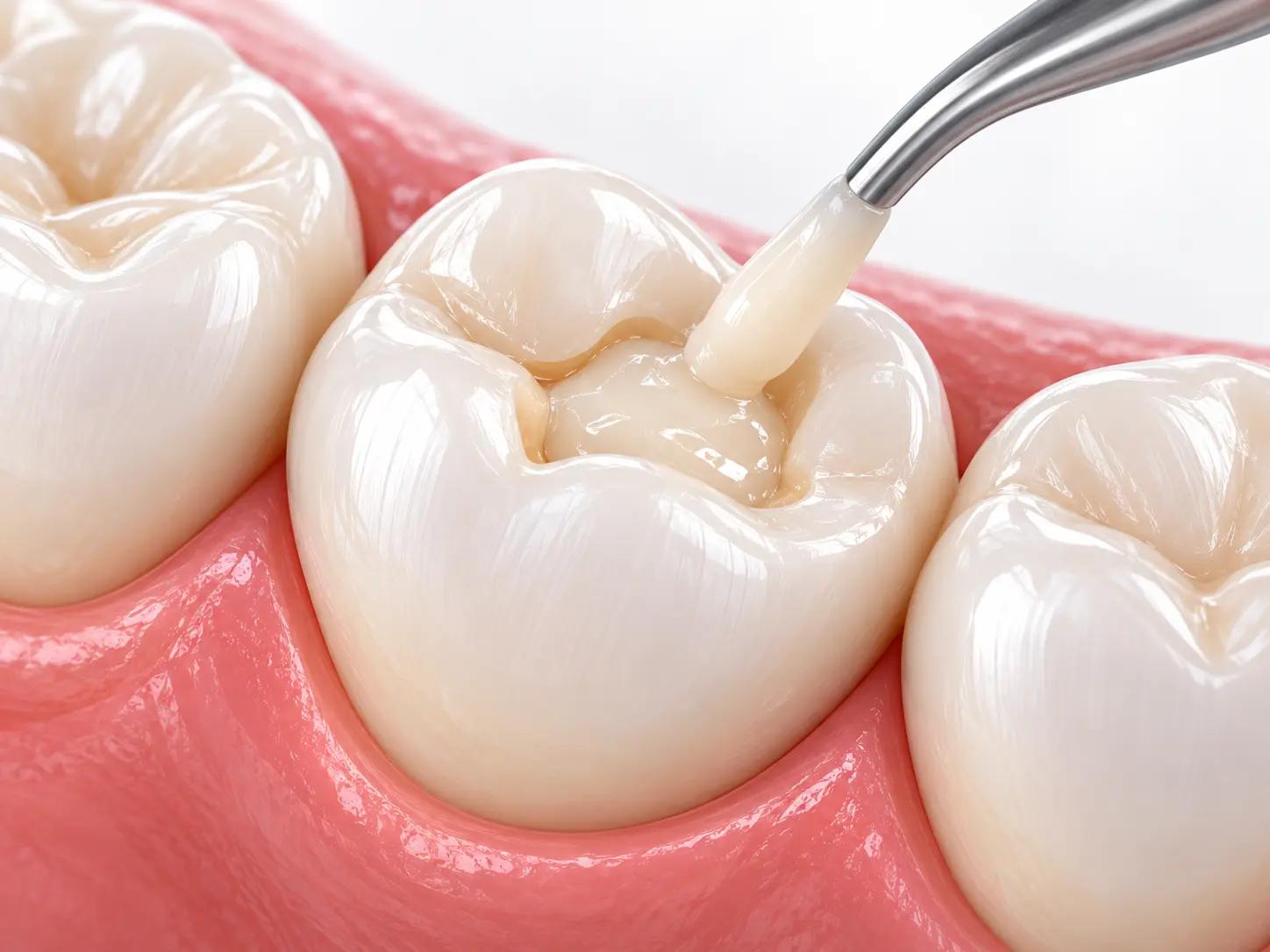
Composite Fillings: Treatment Stages
After necessary preparation, composite is placed and shaped. Contacts and bite are checked. A different restoration may be more appropriate for extensive tissue loss.
Care and Review
Filling margins and tooth health are reviewed. Daily oral care remains important to reduce the risk of further decay.
The method and ongoing care are determined by clinical findings, medical history and individual needs.
What Happens at the First Consultation?
- 01
Your concerns, expectations and medical history are discussed.
- 02
A clinical examination is carried out and relevant diagnostic records are reviewed.
- 03
Treatment options, stages, possible risks and maintenance needs are discussed.
Suitability and a definitive plan are determined after clinical assessment. You can share existing X-rays and a list of medication before the visit.
A Look Inside Our Practice




Composite Fillings — Frequently Asked Questions
What should I know about composite fillings?
A composite filling is a tooth-coloured restoration used for decay or limited tissue loss. Tooth shape and function are restored according to the extent of the defect.
How is suitability assessed?
The depth of decay or fracture, relationship to the pulp and remaining tooth structure are assessed.
What does the process involve?
After necessary preparation, composite is placed and shaped. Contacts and bite are checked. A different restoration may be more appropriate for extensive tissue loss.
How are the number of visits and timing decided?
The scope, clinical findings and any additional stages determine the individual schedule.
Can there be sensitivity during treatment?
Potential sensitivity and comfort measures are discussed before the procedure.
Will I need X-rays or other imaging?
Diagnostic records are selected after assessment; imaging is not ordered routinely when it is not needed.
Are there other options?
Monitoring, conservative care or other treatments may be compared according to the findings.
What follow-up is needed?
Filling margins and tooth health are reviewed. Daily oral care remains important to reduce the risk of further decay.
When might a composite filling be insufficient?
Extensive tissue loss may call for an inlay, onlay or crown after assessment.
Can I enquire from abroad?
You can share preliminary information. A remote conversation does not replace examination or a definitive plan.